Quite recently, in 2023, a new species of a large carnivoran from the Late Eocene of Mongolia was described. The only material known of Lonchocyon qiui is sadly quite fragmentary, with only one hemimandible, c1 (canine), p4 (4th premolar) and m1 (carnassial) being present.
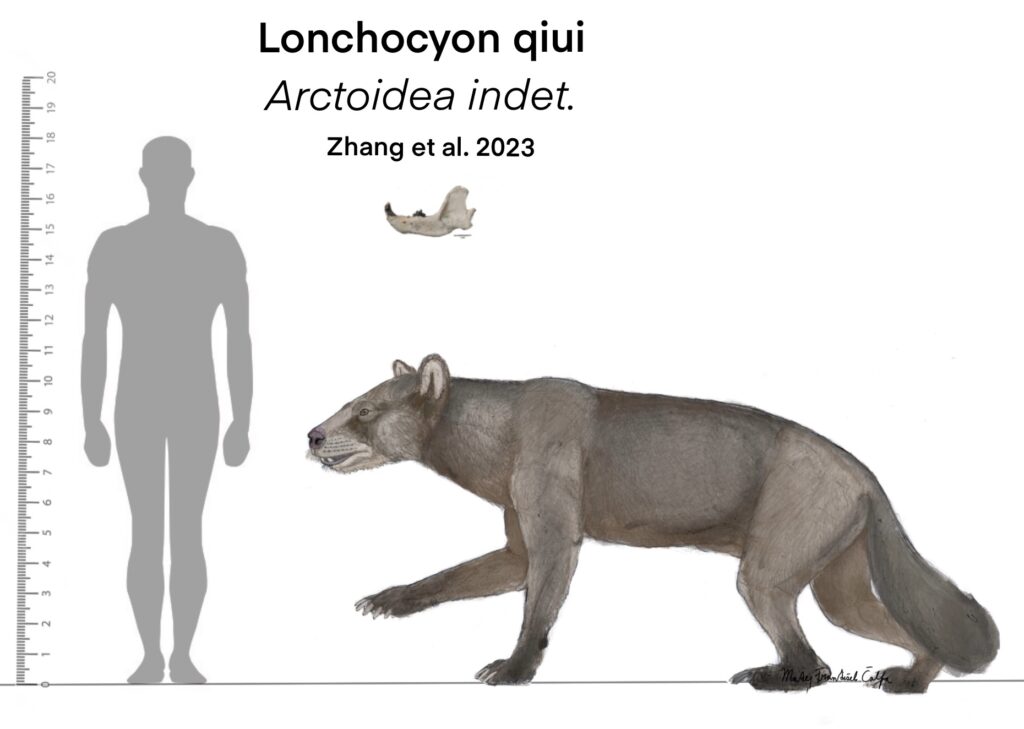
Based on the lower jaw alone, it becomes clear, that this species was a hypercarnivore. That is, it obtained more than 70% of its calories by meat, either hunted on its own or scavenged on. This is indicated by the robust canine, deep jaw, sectorial trigonid of m1 (that is, specialized for shearing) and strongly reduced premolars. But, as authors of the paper state, there are several hypercarnivorous arctoids that posses functional non-reduced p4 (opposed to our species).
One characteristic of Lonchocyon that could be considered “primitive” or unspecialized, is the retention of unreduced post-carnassial teeth (m2, m3) which usually do the crushing job in carnivorans. In other carnivoran hypercarnivores, these teeth tend to be strongly reduced.
Taking it all to consideration, L. qiui, could consume both flesh and hard objects like bone.
Here, a hypothetical skull is shown:
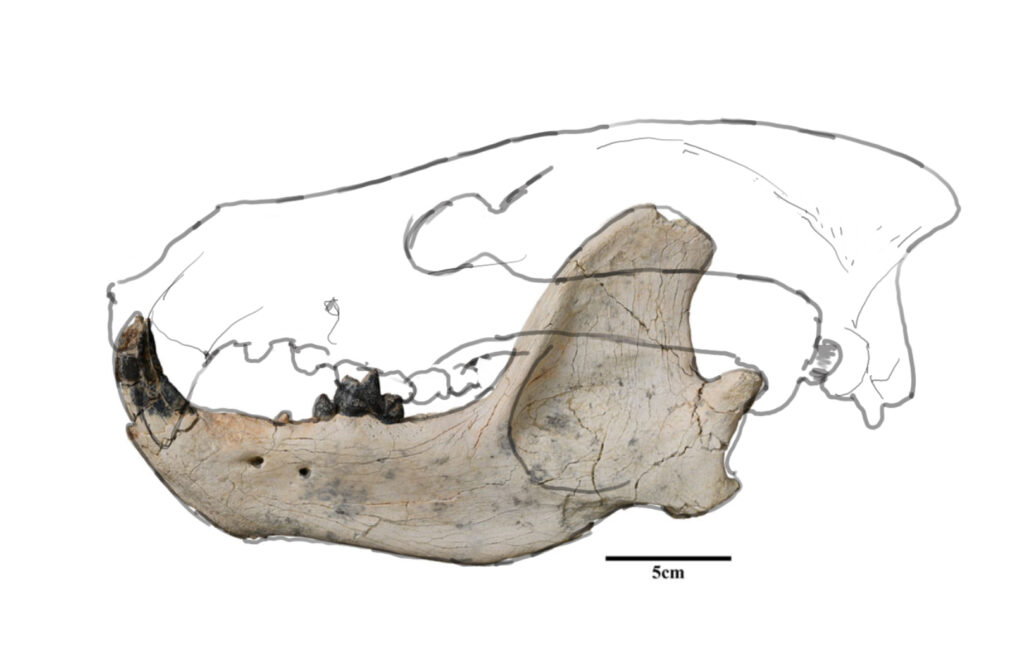
Right now, the question remains: Was Lonchocyon an amphicyonid or a true bear of the subfamily hemicyoninae? It’s not known yet. What is known however, is, that it represents an early offshoot of one of these groups, appearing quite early in their history (Late Eocene).
During the cenozoic, the suborder Caniformia has produced several lineages of carnivores, which cannot be compared to any living caniforms, hence, occupied a niche that either today remains vacant or is taken by a non-caniform. Such example would be the amphicyonids (bear-dogs) or the ursids (true bears) of the subfamily hemicyoninae. Contradictory to the name “bear-dog”, later, more specialized amphicyonids (amphicyoninae, thaumastocyoninae..) show a combination of skeletal traits and articulations rather resembling a mix between a bear and a big cat. Having a tendation to become hypercarnivorous, with the ability to deliver powerful, deep canine bite, combined with well developed pronation-supination movement, one would imagine these predators as solitary, ambush hunters and scavengers, much more like big cats and bears than any canid or hyaena. One representative of these robust carnivores is Ammitocyon:
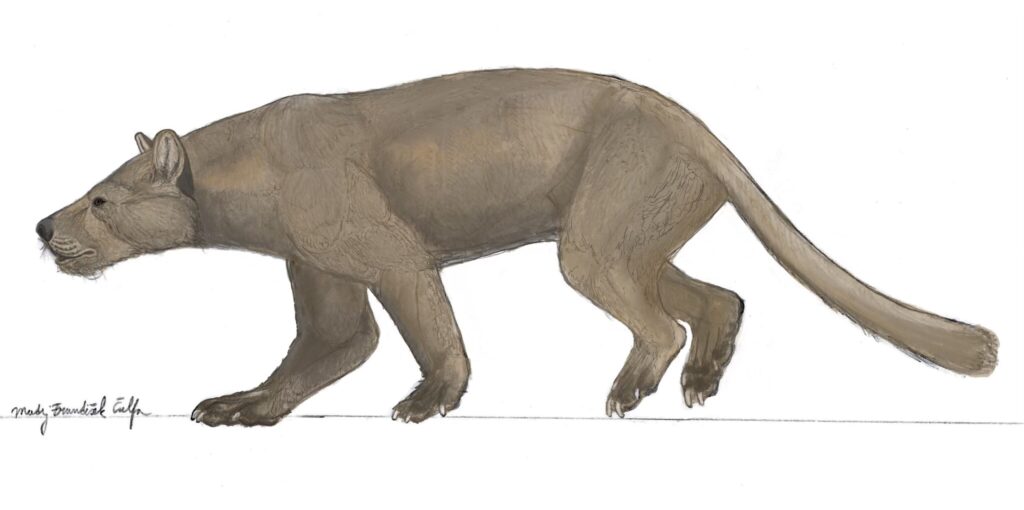
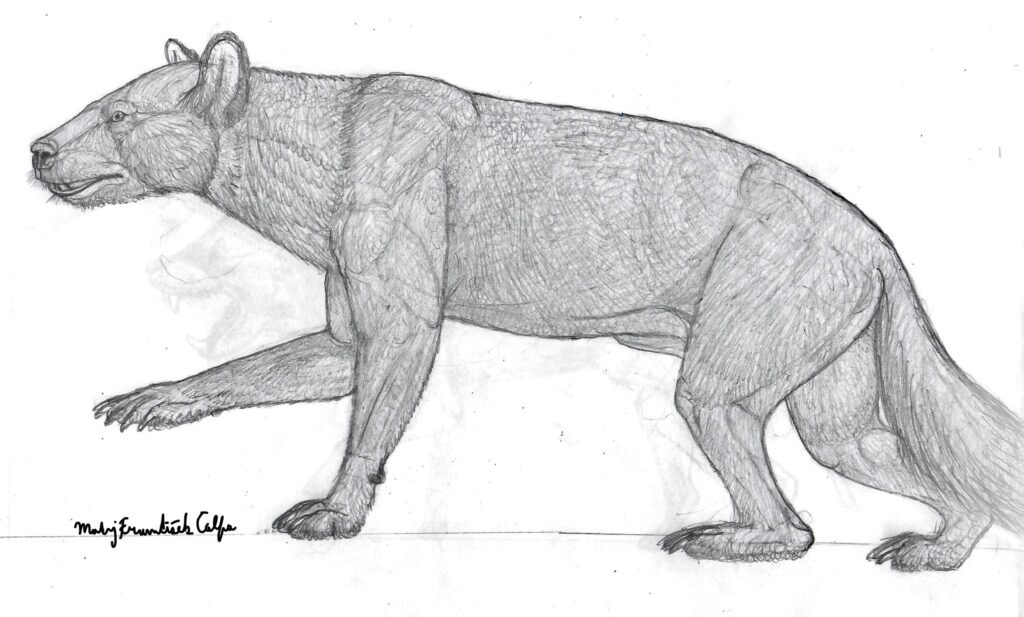
Does this mean that this is exactly how we can imagine Lonchocyon to look like? Perhaps yes. Until more of its material is found and described it’s hard to tell with absolute certainty how exactly L. qiui was built.
This fascinating caniform remain to remind us of our humble knowledge of the history and evolution of the Caniformia clade, that in the past produced one of the most fearsome mammalian land predators that roamed the whole Afroeurasia and North America.
Used Literature: